Leveraging machine learning models in evaluating ADMET properties for drug discovery and development
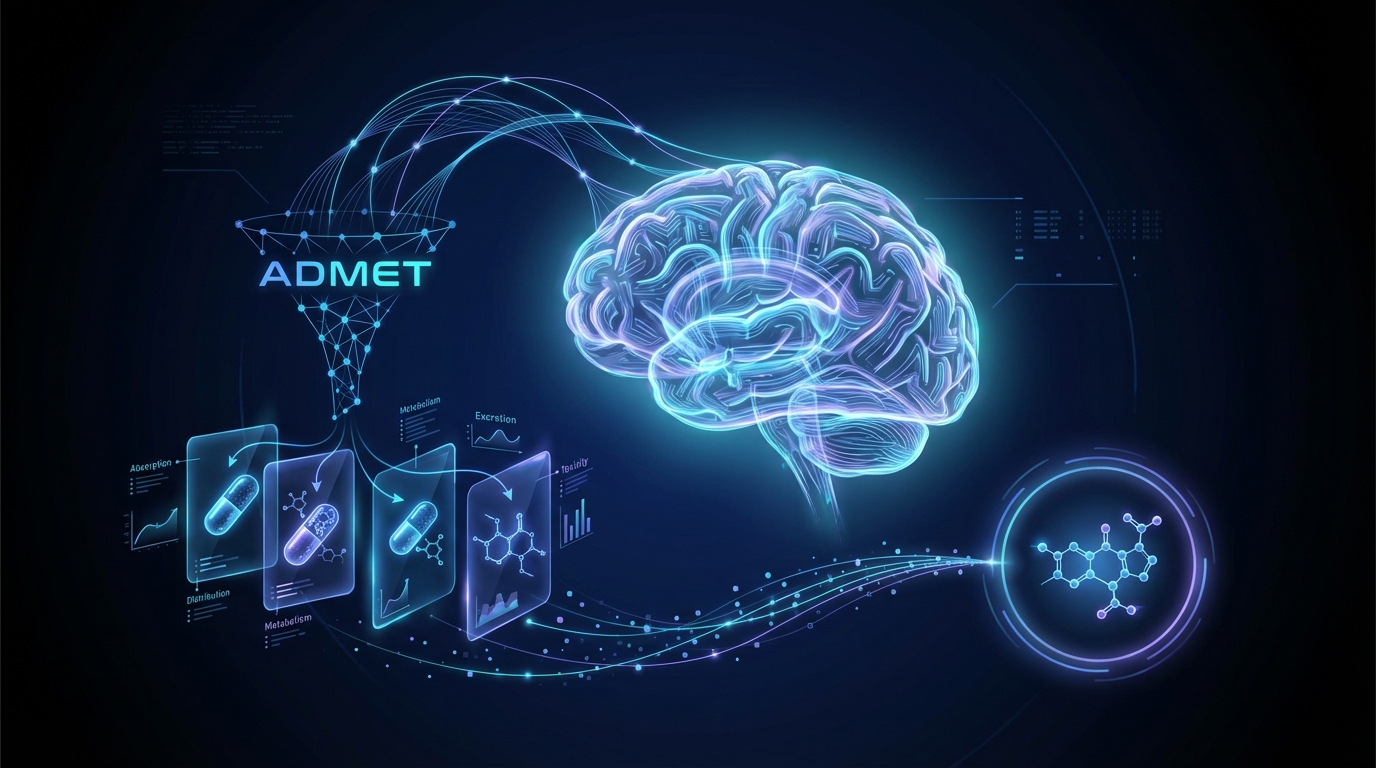
Image generated by Gemini AI
Recent advances in machine learning (ML) are transforming ADMET (Absorption, Distribution, Metabolism, Excretion, Toxicity) predictions in drug development, addressing the high attrition rates of drug candidates. ML models show improved accuracy and efficiency over traditional methods, with applications in solubility, permeability, metabolism, and toxicity assessments. Although challenges like data quality and regulatory acceptance remain, integrating ML into drug discovery workflows could significantly enhance early risk assessment and compound prioritization.
Machine Learning Models Transform ADMET Evaluation in Drug Development
The integration of machine learning (ML) models into the evaluation of ADMET (Absorption, Distribution, Metabolism, Excretion, and Toxicity) properties is reshaping drug discovery and promises to lower the high attrition rates associated with drug candidates.
Current Landscape of ML in ADMET Prediction
The review emphasizes the utilization of both supervised and deep learning techniques in predicting key ADMET endpoints. Notably, ML-based models have shown superiority over traditional quantitative structure-activity relationship (QSAR) models, offering rapid, cost-effective, and reproducible alternatives that integrate seamlessly into existing drug discovery pipelines.
Key findings include:
- ML models are increasingly being adopted for predictions related to solubility, permeability, metabolism, and toxicity.
- Challenges such as data imbalance, algorithm transparency, and regulatory acceptance remain pressing concerns.
Case Studies Illustrating ML Success
Several case studies featured in the review showcase successful deployments of ML models in drug development scenarios, highlighting their potential for improving ADMET predictions and streamlining the overall development process.
Challenges and Future Directions
Despite promising results, challenges surrounding data quality, algorithm interpretability, and regulatory acceptance remain significant hurdles. Continued integration of ML with experimental pharmacology is expected to enhance drug development efficiency.
Related Topics:
📰 Original Source: https://doi.org/10.5599/admet.2772
All rights and credit belong to the original publisher.