AI
AI News

Latest AI News

Anthropic releases Sonnet 4.6 | TechCrunch

Anthropic releases Sonnet 4.6 | TechCrunch

Anthropic has unveiled an updated version of its mid-size Sonnet model, continuing its trend of releasing updates every four months. The latest iteration boasts enhanced performance in collaborative tasks and improved safety features. These advancements aim to address user feedback and optimize the model for practical applications in various industries, reinforcing Anthropic's commitment to responsible AI development.

TechCrunch

MIT community members elected to the National Academy of Engineering for 2026

MIT community members elected to the National Academy of Engineering for 2026

Seven MIT researchers have been elected to the National Academy of Engineering for 2026, part of a group totaling 130 new members and 28 international members. Additionally, 12 MIT alumni received the honor. This recognition underscores the institution's significant contributions to engineering and innovation.

Mit.edu
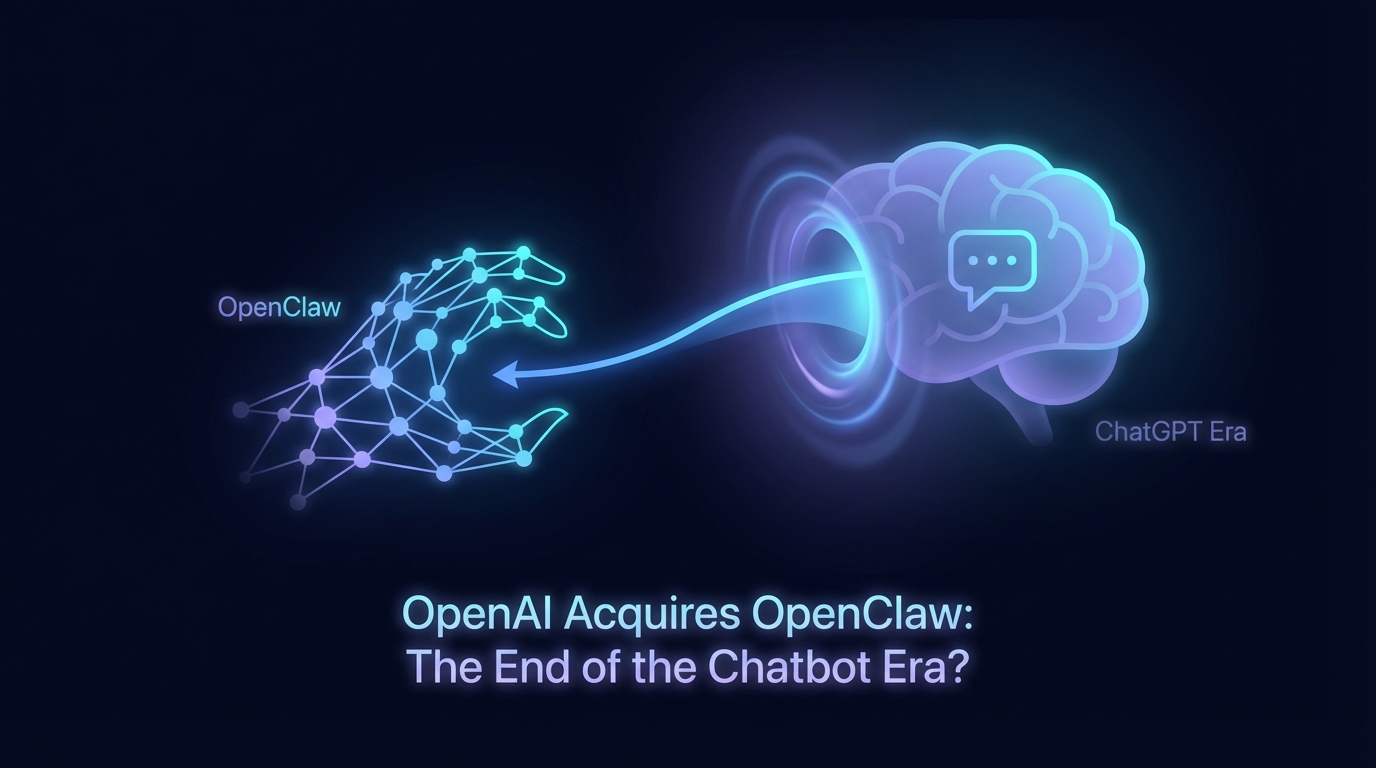
OpenAI's acquisition of OpenClaw signals the beginning of the end of the ChatGPT era

OpenAI's acquisition of OpenClaw signals the beginning of the end of the ChatGPT era

Peter Steinberger's OpenClaw, an open-source AI agent, has sparked significant debate in the developer community, potentially signaling the end of the chatbot era. Concerns are emerging about its capabilities and ethical implications, raising questions about the future role of AI in development. This shift could redefine how developers interact with AI tools.

VentureBeat
India bids to attract over $200B in AI infrastructure investment by 2028 | TechCrunch

India bids to attract over $200B in AI infrastructure investment by 2028 | TechCrunch

India aims to attract over $200 billion in AI infrastructure investments within the next two years, focusing on enhancing its status as a global AI hub. The initiative includes partnerships with tech firms, incentives for startups, and improved regulatory frameworks. This push could significantly boost the country's tech sector and job market.

TechCrunch
New AI model could cut the costs of developing protein drugs

New AI model could cut the costs of developing protein drugs

MIT chemical engineers have advanced the use of industrial yeasts for protein production by incorporating artificial intelligence to optimize the fermentation process. This innovation improves the efficiency of manufacturing vaccines and biopharmaceuticals. The study demonstrates enhanced yield and speed, promising significant implications for the biotechnology sector.

Mit.edu
Rethinking Diffusion Models with Symmetries through Canonicalization with Applications to Molecular Graph Generation

Rethinking Diffusion Models with Symmetries through Canonicalization with Applications to Molecular Graph Generation

Researchers propose a new approach to generative tasks in chemistry, moving away from traditional invariant and equivariant models. They introduce a canonicalization method that simplifies training and enhances performance by mapping samples to a standardized form before applying non-equivariant models. This framework, tested on molecular graph generation with $S_n \times SE(3)$ symmetries, outperforms existing models, particularly in 3D molecule generation, demonstrating state-of-the-art results on the GEOM-DRUG dataset.

arXiv
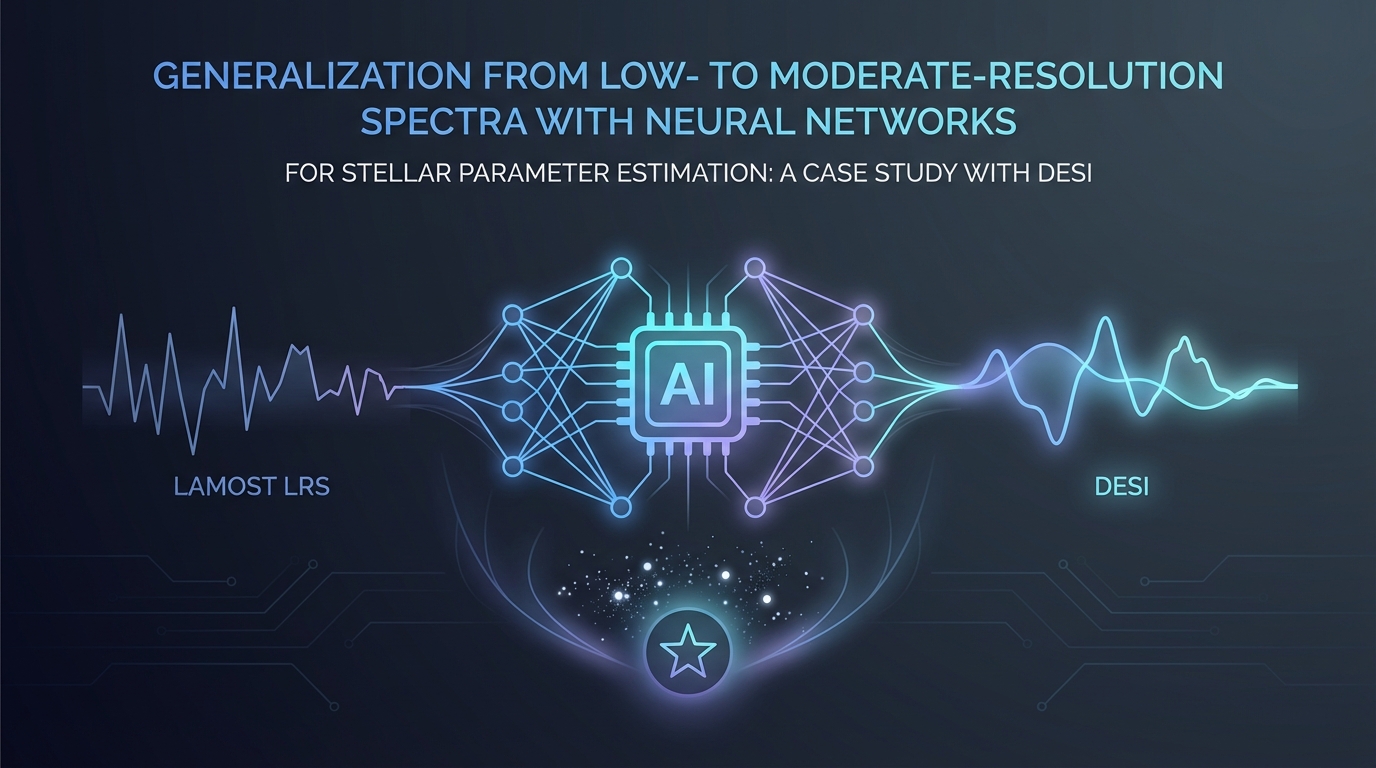
Generalization from Low- to Moderate-Resolution Spectra with Neural Networks for Stellar Parameter Estimation: A Case Study with DESI

Generalization from Low- to Moderate-Resolution Spectra with Neural Networks for Stellar Parameter Estimation: A Case Study with DESI

A study addresses the challenge of cross-survey generalization in stellar spectral analysis by using pre-trained multilayer perceptrons (MLPs) to transfer data from LAMOST low-resolution spectra (LRS) to DESI medium-resolution spectra (MRS). The research shows that MLPs pre-trained on LRS perform well even without fine-tuning and improve further with DESI data. While transformer-based embeddings excel for metal-rich stars, they fall short for metal-poor stars compared to MLP-trained models. The choice of fine-tuning strategy varies based on the stellar parameter being analyzed, suggesting that while simple MLPs can effectively generalize across surveys, the potential of spectral foundation models requires additional study.

arXiv
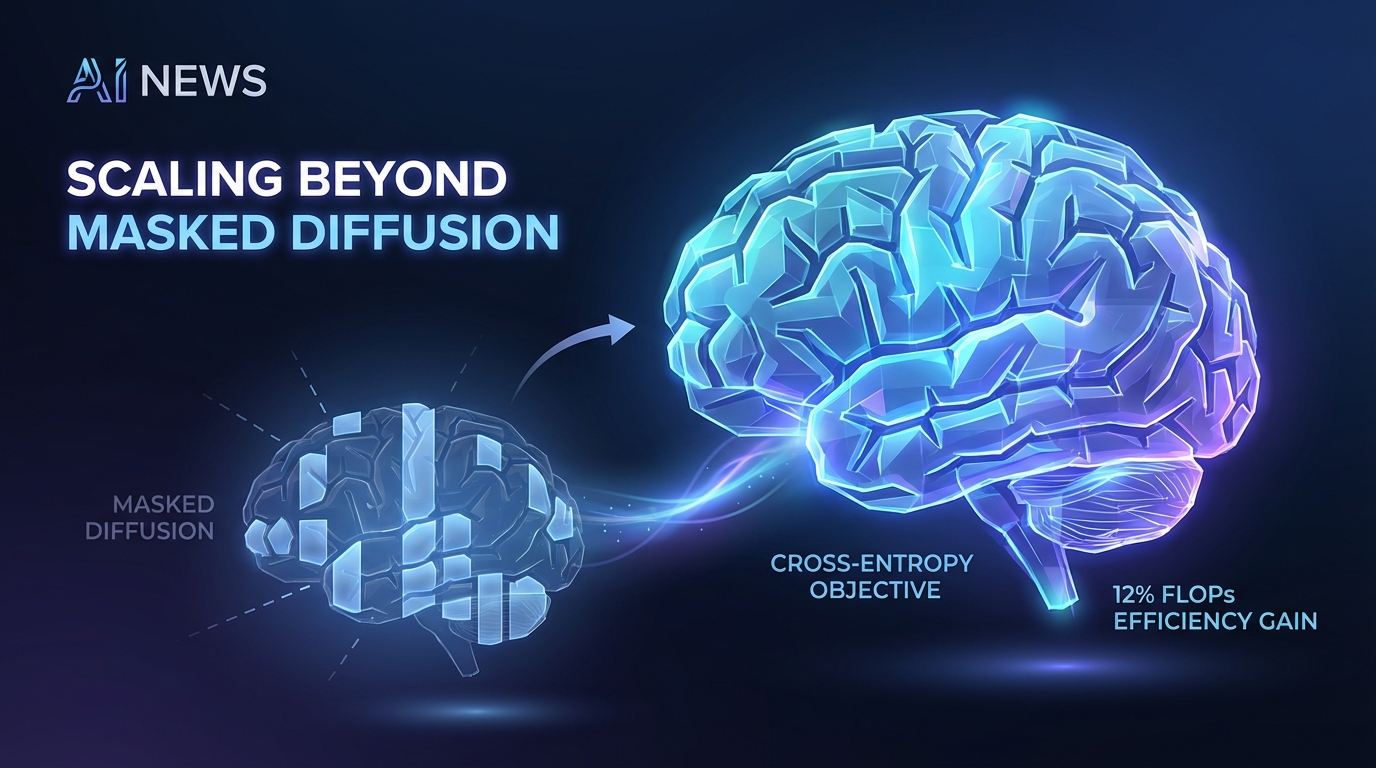
Scaling Beyond Masked Diffusion Language Models

Scaling Beyond Masked Diffusion Language Models

Recent research reveals that Masked diffusion models, while currently leading in perplexity scores, can be improved by 12% in FLOPs efficiency using a cross-entropy training objective. The study challenges the notion that perplexity is a reliable metric for comparing different diffusion models. Notably, uniform-state diffusion outperformed both autoregressive and Masked diffusion models on the GSM8K benchmark despite lower perplexity. Full details and resources are available at their project page.

arXiv
How Ricursive Intelligence raised $335M at a $4B valuation in 4 months | TechCrunch

How Ricursive Intelligence raised $335M at a $4B valuation in 4 months | TechCrunch

Ricursive Intelligence, co-founded by AI veterans Anna Goldie (CEO) and Azalia Mirhoseini (CTO), aims to revolutionize natural language processing. With a focus on enhancing AI's understanding of context, their platform promises more nuanced interactions. The startup has already attracted significant investment, highlighting industry confidence in their vision.

TechCrunch
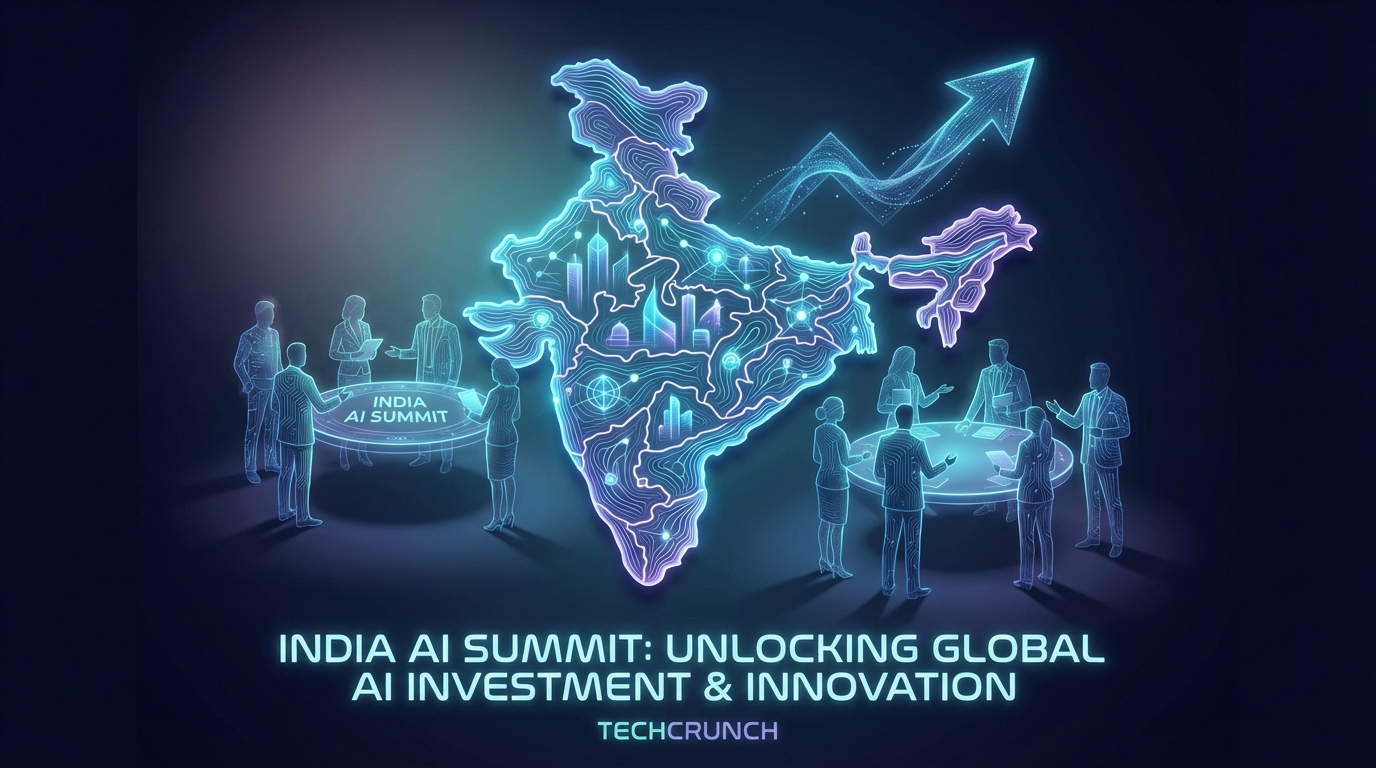
All the important news from the ongoing India AI Summit | TechCrunch

All the important news from the ongoing India AI Summit | TechCrunch

India is hosting a four-day AI Impact Summit aimed at attracting investment in artificial intelligence. The event features participation from executives of leading AI labs and major tech companies, signaling the country's intent to enhance its position in the global AI landscape. Key discussions are expected to focus on collaboration, innovation, and policy frameworks to bolster AI development in India.

TechCrunch