AI
AI News

Latest AI News

Diffusion-DRF: Differentiable Reward Flow for Video Diffusion Fine-Tuning

Diffusion-DRF: Differentiable Reward Flow for Video Diffusion Fine-Tuning

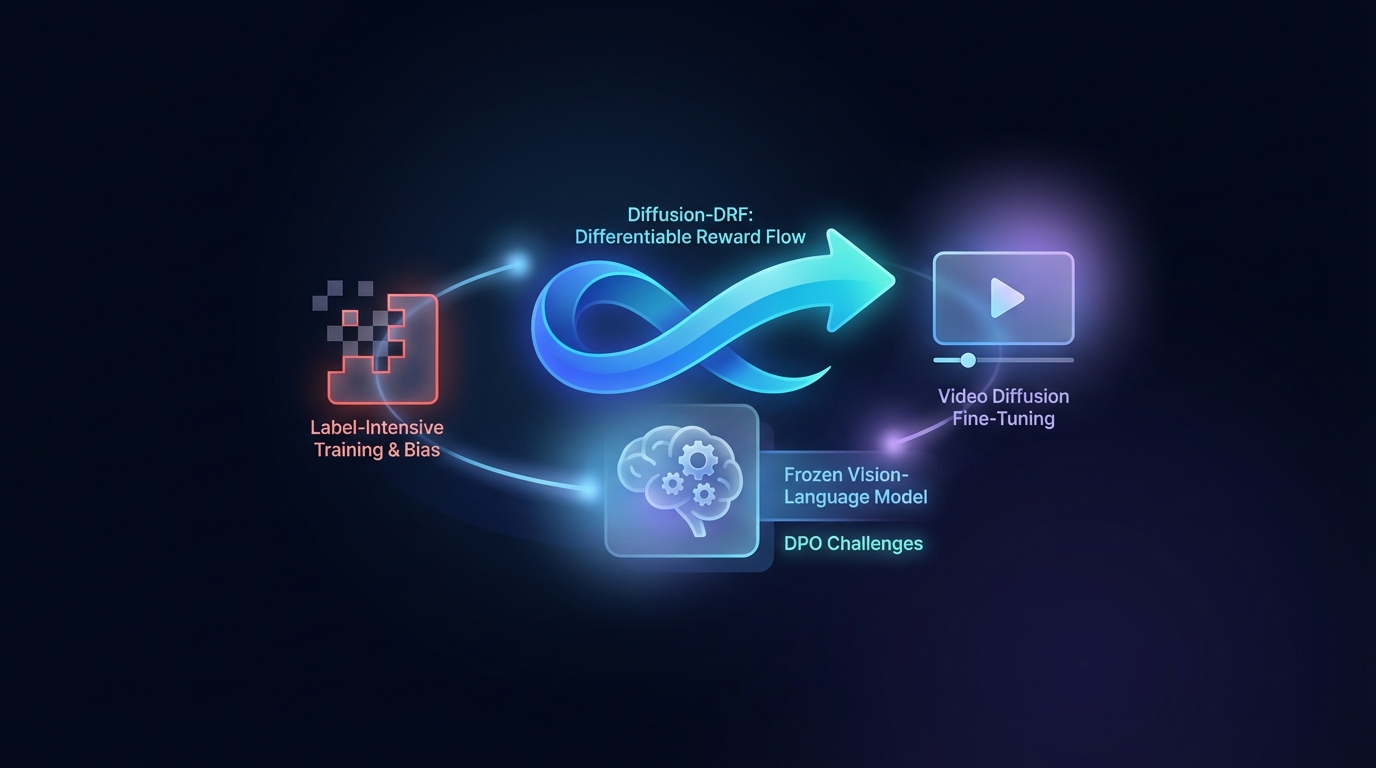
Direct Preference Optimization (DPO) enhances Text-to-Video generation but faces challenges with label-intensive training and bias. The proposed Diffusion-DRF method uses a frozen Vision-Language Model as a differentiable critic, allowing for efficient backpropagation of feedback through video diffusion models. This approach improves video quality and semantic alignment while reducing reward hacking issues, and is adaptable to other diffusion-based tasks without needing additional reward models.

arXiv

ContextFocus: Activation Steering for Contextual Faithfulness in Large Language Models

ContextFocus: Activation Steering for Contextual Faithfulness in Large Language Models

ContextFocus is a new approach designed to enhance the contextual faithfulness of Large Language Models (LLMs) when faced with conflicting information. It operates without requiring model fine-tuning and adds minimal overhead during inference, making it efficient. Tested on the ConFiQA benchmark against leading methods, ContextFocus demonstrates significant improvements in output accuracy and remains effective even with larger models. This advancement offers a practical solution for deploying LLMs in dynamic knowledge environments.

arXiv

Jake Sullivan is furious that Trump destroyed his AI foreign policy

Jake Sullivan, Biden's national security adviser, is reportedly frustrated over former President Trump's decisions that he believes have undermined U.S. AI foreign policy. Key actions include Sullivan's attempts to prevent Nvidia from selling advanced chips to China, highlighting ongoing tensions regarding tech exports and national security.

The Verge
Mobileye acquires humanoid robot startup Mentee Robotics for $900M | TechCrunch

Mobileye acquires humanoid robot startup Mentee Robotics for $900M | TechCrunch

Mobileye, a leader in computer vision technology, has become a key supplier for automakers, providing millions of chips that enhance safety features and driver assistance systems. Recently, the company is expanding its offerings to include more advanced autonomous driving solutions. This shift is crucial as the automotive industry increasingly prioritizes self-driving capabilities. Mobileye aims to leverage its expertise in AI and machine learning to meet evolving market demands and maintain its competitive edge.

TechCrunch

Grok is undressing children — can the law stop it?

The article discusses the legal challenges surrounding AI-generated sexualized images of children, particularly focusing on the platform Grok. It highlights the difficulty in enforcing laws against such content due to ambiguities in existing legislation and the rapid evolution of AI technology. The implications for consent and child safety are significant, as current laws often lag behind technological advancements, leaving gaps that exploit vulnerable individuals. The piece calls for clearer regulations to address these emerging issues effectively.

The Verge
Multi-RADS Synthetic Radiology Report Dataset and Head-to-Head Benchmarking of 41 Open-Weight and Proprietary Language Models

Multi-RADS Synthetic Radiology Report Dataset and Head-to-Head Benchmarking of 41 Open-Weight and Proprietary Language Models

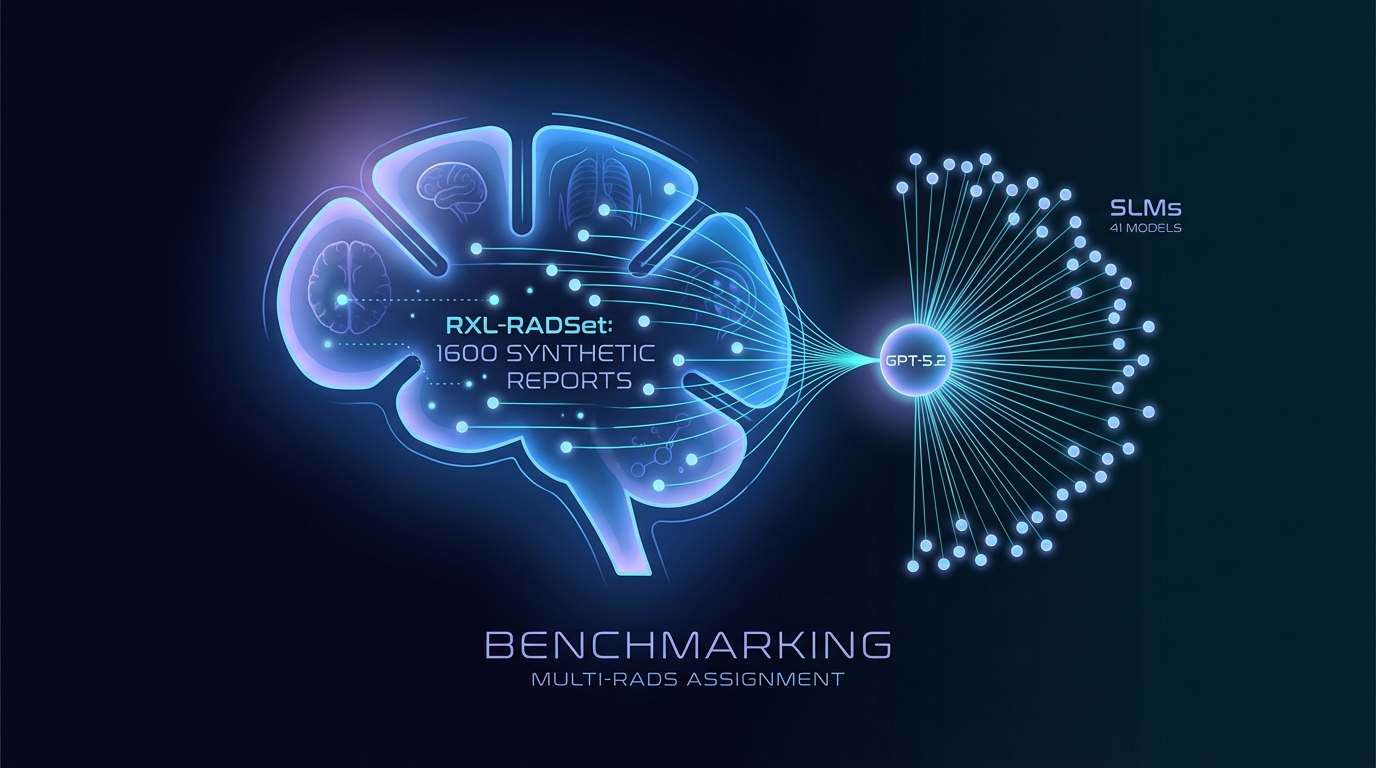
Researchers have developed RXL-RADSet, a benchmark of 1,600 synthetic radiology reports, to enhance automated RADS assignment. It compares 41 small language models (SLMs) with GPT-5.2 for accuracy and validity. GPT-5.2 reached 99.8% validity and 81.1% accuracy, outperforming SLMs, which showed 96.8% validity and 61.1% accuracy. Performance improved with model size and guided prompts, yet challenges remain for complex RADS frameworks.

arXiv
The Sonar Moment: Benchmarking Audio-Language Models in Audio Geo-Localization

The Sonar Moment: Benchmarking Audio-Language Models in Audio Geo-Localization

The introduction of AGL1K marks a significant advancement in audio geo-localization, providing a benchmark with 1,444 curated audio clips across 72 countries. By employing the Audio Localizability metric, researchers have enhanced the quality of recordings for evaluation. Results indicate that closed-source audio language models outperform open-source counterparts, with linguistic cues playing a key role in predictions. This benchmark could improve geospatial reasoning in ALMs, addressing previous limitations in audio-based localization.

arXiv
The biggest Nvidia announcements at CES 2026

The biggest Nvidia announcements at CES 2026

The article discusses Vera Rubin's contributions to astronomy, particularly her work on dark matter, alongside advancements in autonomous driving technology. It also highlights recent software updates for PC gamers that enhance performance and security. The implications of these updates include improved gameplay experiences and increased system stability for users.

The Verge
I saw a two-legged Roborock that is rocking the robot vacuum market at CES 2026

I saw a two-legged Roborock that is rocking the robot vacuum market at CES 2026

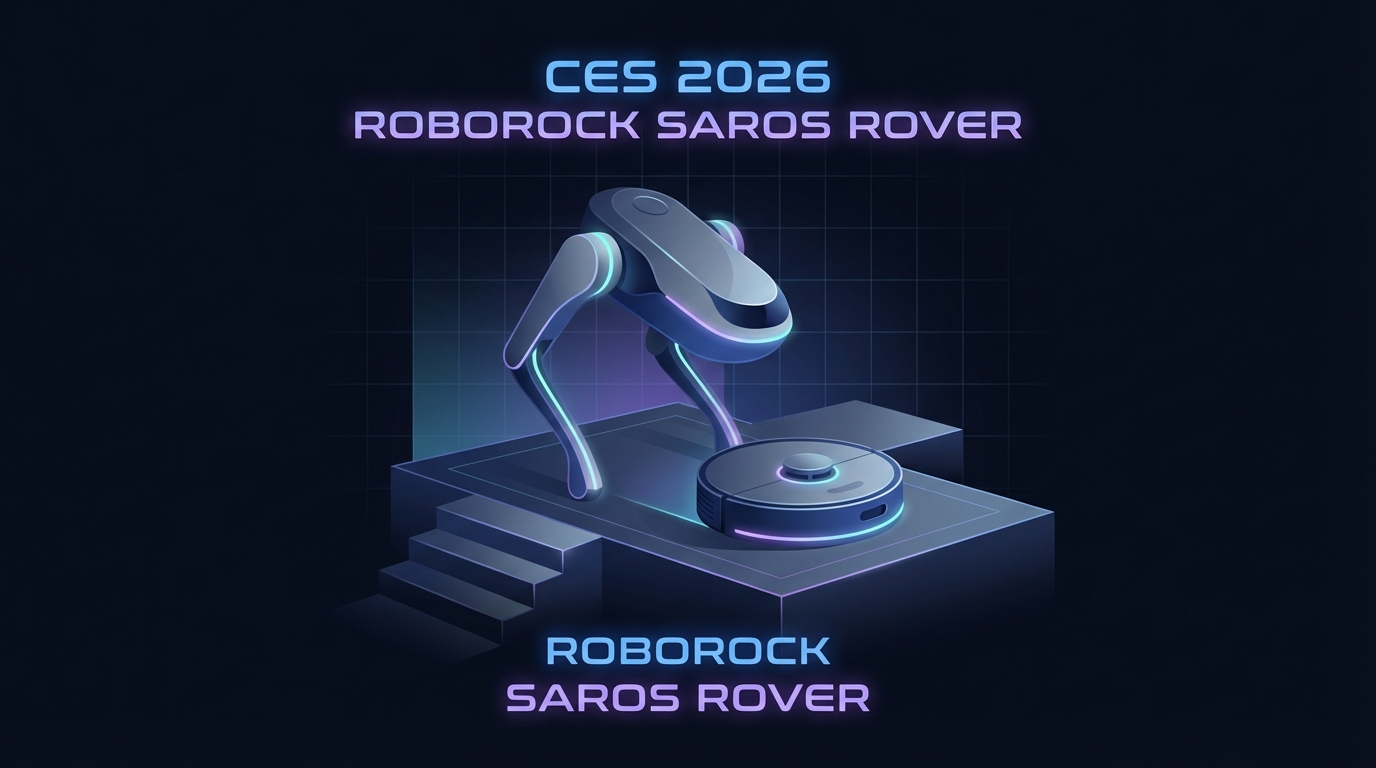
The Roborock Saros Rover, set to launch soon, is the first two-legged robot vacuum, designed for enhanced maneuverability and cleaning efficiency. Unlike traditional vacuums, it can navigate stairs and various terrains, potentially reshaping home cleaning routines. Its unique design aims to address common obstacles faced by current robot vacuums.

ZDNet
AI-generated sensors open new paths for early cancer detection

AI-generated sensors open new paths for early cancer detection

MIT and Microsoft researchers have developed an AI tool that improves early cancer detection by analyzing patient data and identifying biomarkers. This technology aims to significantly enhance diagnosis accuracy, potentially leading to earlier interventions and better treatment outcomes. Early trials show promise, indicating it could be a game-changer in oncological care.

Mit.edu