AI
AI News

Latest AI News

Diffusion-Pretrained Dense and Contextual Embeddings

Diffusion-Pretrained Dense and Contextual Embeddings

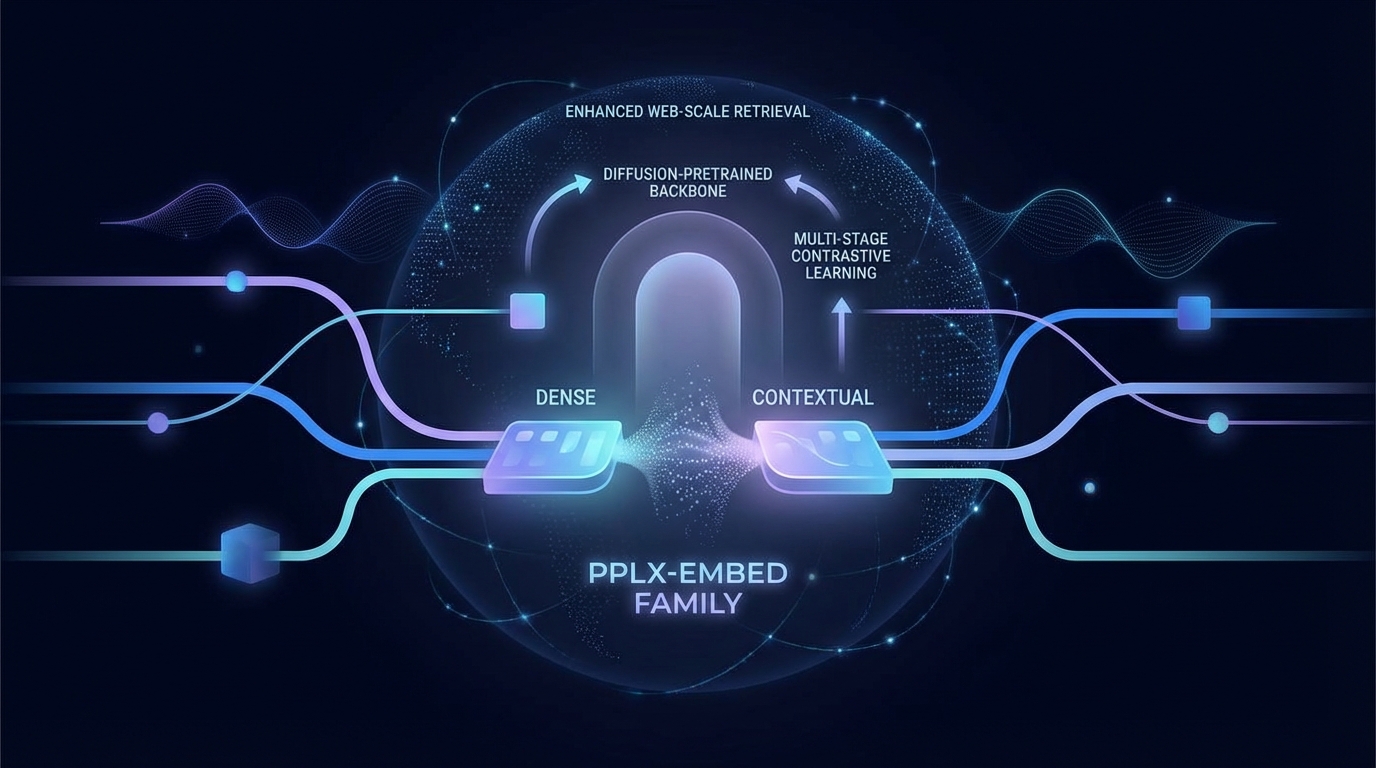
The new pplx-embed family of multilingual embedding models utilizes multi-stage contrastive learning on a diffusion-pretrained backbone for enhanced web-scale retrieval. Two variants are released: pplx-embed-v1 for standard tasks and pplx-embed-context-v1 for contextual embeddings. The latter excels on the ConTEB benchmark, while both models perform well across several other retrieval benchmarks and internal evaluations, indicating their reliability for large-scale search applications.

arXiv
Beyond VLM-Based Rewards: Diffusion-Native Latent Reward Modeling

Beyond VLM-Based Rewards: Diffusion-Native Latent Reward Modeling

Researchers have introduced DiNa-LRM, a diffusion-native latent reward model that optimizes preference learning directly on noisy diffusion states. This approach utilizes a noise-calibrated Thurstone likelihood to enhance alignment efficiency. DiNa-LRM outperforms existing diffusion-based reward systems and competes with leading Vision-Language Models, achieving significant improvements in speed and resource use during model alignment.

arXiv
SCRAPL: Scattering Transform with Random Paths for Machine Learning

SCRAPL: Scattering Transform with Random Paths for Machine Learning

Researchers have introduced SCRAPL (Scattering transform with Random Paths for machine Learning), a novel optimization method to streamline the use of wavelet scattering transforms in neural network training. By employing a stochastic approach, SCRAPL enhances the efficiency of joint time-frequency scattering transforms for analyzing sound patterns, such as in granular synthesis and matching with the Roland TR-808. The method includes an importance sampling heuristic to improve model convergence and performance. Code and audio samples are available as a Python package, facilitating broader application in audio processing tasks.

arXiv
Senior engineers, including co-founders, exit xAI amid controversy | TechCrunch

Senior engineers, including co-founders, exit xAI amid controversy | TechCrunch

In the past week, nine engineers, including two co-founders, have publicly left xAI, signaling potential instability within the company. While some departures were noted earlier, the recent wave raises concerns about the firm's direction and talent retention. This trend could impact ongoing projects and investor confidence.

TechCrunch
CBP Signs Clearview AI Deal to Use Face Recognition for ‘Tactical Targeting’

CBP Signs Clearview AI Deal to Use Face Recognition for ‘Tactical Targeting’

U.S. Customs and Border Protection has allocated $225,000 for a one-year subscription to Clearview AI, a facial recognition software that matches images against a database of billions of publicly-sourced photos. This decision raises privacy concerns about surveillance practices, as the technology could be used to identify individuals without their consent.

Wired
Meridian raises $17 million to remake the agentic spreadsheet | TechCrunch

Meridian raises $17 million to remake the agentic spreadsheet | TechCrunch

Meridian has launched from stealth mode, introducing an innovative IDE-based platform aimed at enhancing financial modeling through AI. This tool focuses on automating complex spreadsheet tasks, addressing common inefficiencies. Meridian's approach could streamline financial analysis and decision-making processes for businesses, potentially reducing reliance on traditional spreadsheet methods.

TechCrunch
Uber Eats adds AI assistant to help with grocery shopping

Uber Eats adds AI assistant to help with grocery shopping

The article discusses a newly launched feature that allows users to generate content using either text or image prompts. Users are warned to verify their orders before finalizing them, suggesting potential issues with outputs. This highlights the importance of user diligence in utilizing the tool effectively.

The Verge
Learning on the Manifold: Unlocking Standard Diffusion Transformers with Representation Encoders

Learning on the Manifold: Unlocking Standard Diffusion Transformers with Representation Encoders

A new approach called Riemannian Flow Matching with Jacobi Regularization (RJF) addresses convergence issues in diffusion transformers when generating high-fidelity outputs from representation encoders. By focusing on manifold geodesics and correcting curvature errors, RJF allows the DiT-B architecture (131M parameters) to achieve a significant FID score of 3.37, outperforming previous methods. Code is available at the provided GitHub link.

arXiv
Step-resolved data attribution for looped transformers

Step-resolved data attribution for looped transformers

Researchers have developed a new method called Step-Decomposed Influence (SDI) to analyze how individual training examples impact looped transformers during recurrent computations. Unlike existing methods that provide a single influence score, SDI offers a detailed influence trajectory across each iteration. Implemented using TensorSketch, SDI avoids generating per-example gradients, making it scalable for transformer models. Experiments demonstrate that SDI aligns closely with traditional full-gradient methods while enhancing data attribution and interpretability in algorithmic reasoning tasks.

arXiv
Causality in Video Diffusers is Separable from Denoising

Causality in Video Diffusers is Separable from Denoising

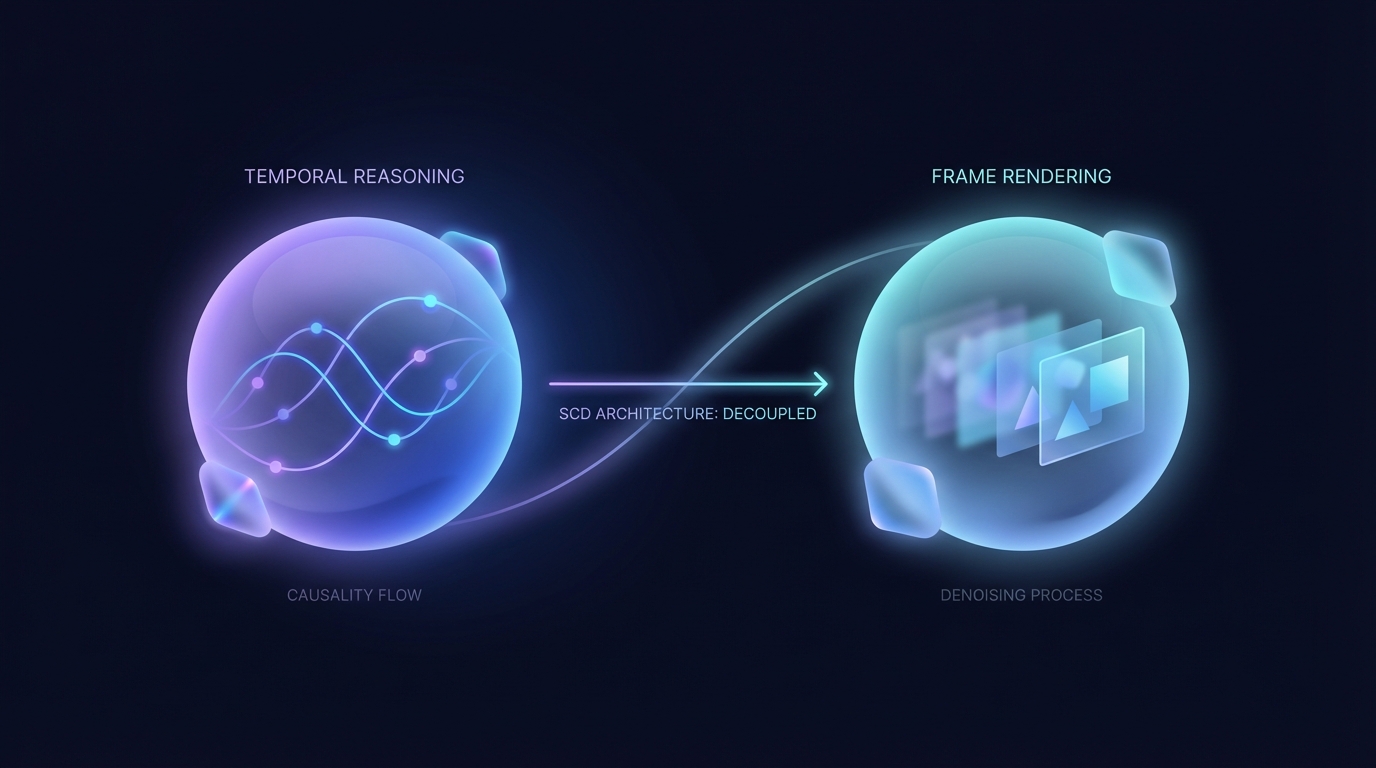
A new architecture, Separable Causal Diffusion (SCD), has been developed to enhance causal diffusion models used in video generation. By decoupling temporal reasoning from multi-step frame rendering, SCD improves efficiency, achieving higher throughput and reduced latency. Experiments show it matches or exceeds the quality of existing models, making it a promising innovation in generative processes.

arXiv
The latest Linux kernel release closes out the 6.x era - and it's a gift to cloud admins

The latest Linux kernel release closes out the 6.x era - and it's a gift to cloud admins

Linux 6.19 has been officially released, offering enhancements in performance and support for new hardware, including updated drivers for GPUs and networking. Meanwhile, development for Linux 7.0 has begun, signaling upcoming features and improvements. Users are encouraged to upgrade to 6.19 for the latest optimizations and stability.

ZDNet
OpenAI Abandons ‘io’ Branding for Its AI Hardware

OpenAI Abandons ‘io’ Branding for Its AI Hardware

OpenAI announced it will not use the name "io" for its upcoming AI hardware line, following a court filing related to a trademark infringement lawsuit initiated by audio device company, Audioio. This decision aims to avoid further legal complications as the case continues to unfold in court.

Wired